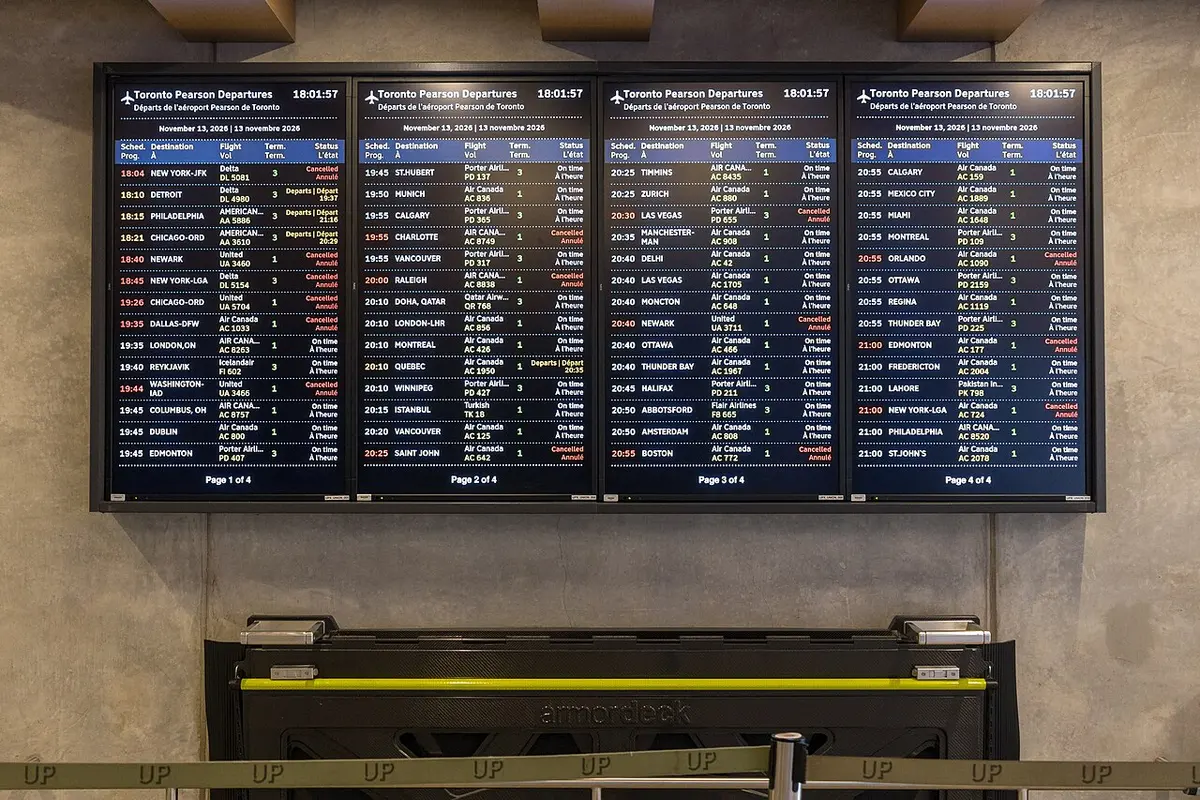
On 13 November, the FAA, the US agency responsible for air traffic control, stopped departures at every airport in the country. The halt lasted more than four hours, but its impact lasted days: more than 18,000 flights were canceled and more than 28,000 were delayed.
The trigger may have been one router, a piece of network equipment, but the public explanation is still incomplete. Transportation Secretary Sean Duffy blamed the FAA's old communications network. Duffy linked the problem to routine work by Florida-based contractor L3Harris, which was replacing copper wire with fiber cable. The agency puts the amount of old copper replaced with fiber at 69 percent.
The exact fault remains unclear: Officials did not know whether the router failed or the crew installing it made a mistake. The network trouble disrupted radar information and communication with some aircraft. The FAA described the network as operational but unstable, while departures stopped nationwide.
That uncertainty matters to you because upgrades happen inside a system that guides live flights. Fiber carries data at higher speeds, and the FAA is doing this work across the country while planes remain in the air. A network change can affect the system controllers use to manage flights.
The coordination problem is broader than one router. A September audit found the FAA had thousands of modernization projects but no shared schedule to manage them, leaving costs uncertain and flights vulnerable to disruption.
Passengers feel control-system work through the flights they can take, not through the cable being replaced. The FAA has paused installations of the router type involved, but it has not explained why traffic stopped entirely.