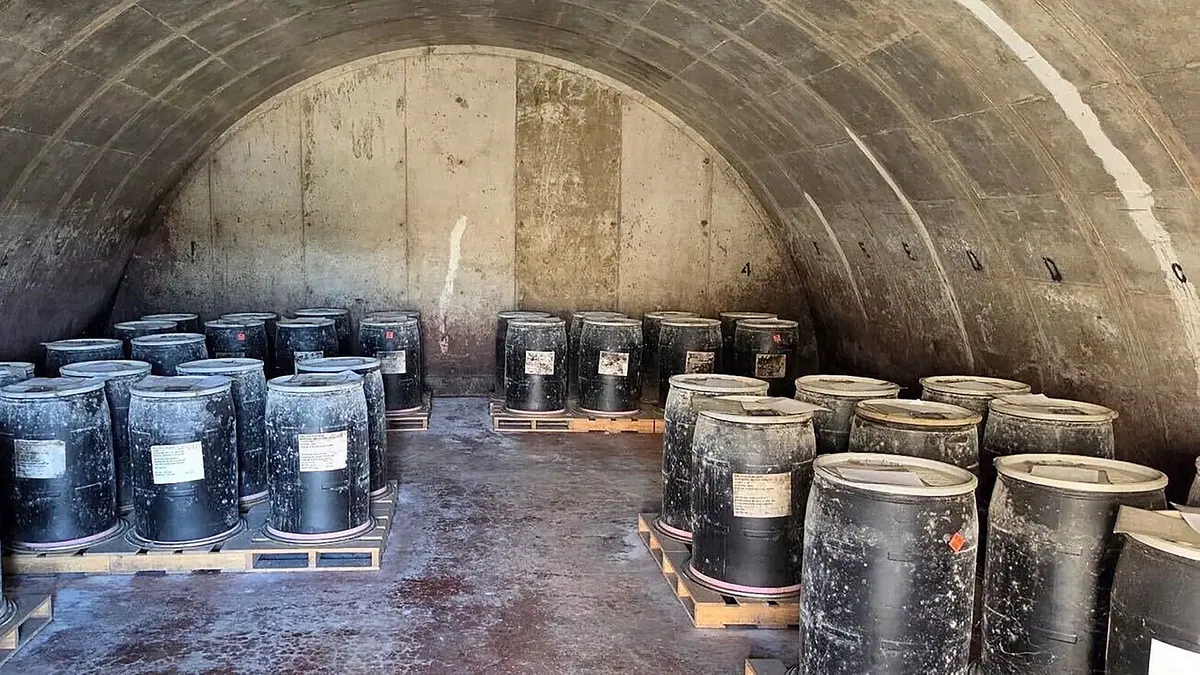
The Army detonated 68 barrels of unstable explosives near Middletown, Iowa, on 25 November 2026. The material, lead azide, had become too dangerous to move safely, so officials used a controlled blast to dispose of it.
The explosion released a plume, and residents nearby were advised to evacuate or shelter indoors. The Army had surrounded the barrels with sand and lime, and used water and foam to limit dust. The blast took place at the Iowa Army Ammunition Plant, where the stockpile had been kept for decades.
Lead is a neurotoxin, a substance that can damage nerve tissue. It persists in the environment, and children and pregnant people face particular health concerns from exposure. That makes the question for local families concrete: did lead reach places where people live, grow food, or draw water?
Early air checks by the Environmental Protection Agency found no lead near the site. But teams are also collecting air, soil, and water samples, since a clean air reading alone cannot show what settled on the ground. University researchers are running their own checks alongside government monitoring, partly to give residents another set of results to compare.
University of Iowa professor Peter Thorne estimates some lab results could take about a week. The Army and EPA are monitoring too; University of Iowa teams are tracking where the plume may have settled, collecting particulate data, and sending air filters to a lab. You can follow the readings as they build, but the soil and water results will take longer to clarify the local picture.
The useful test is what turns up in samples from the places people actually use. Early air readings offer one piece of that picture; residents need the soil and water findings too, especially around private wells and streams.