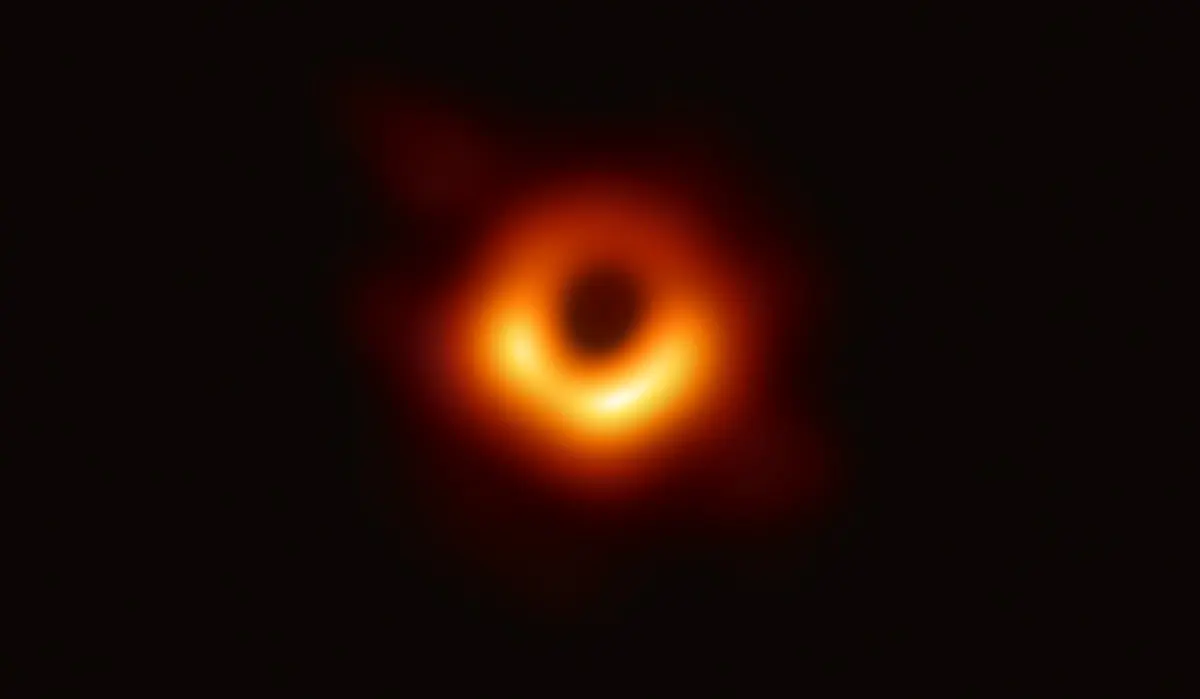
The ring in the first black-hole image has held up under a fresh test. A team built a new way to process the original data from the Event Horizon Telescope, a global network of radio telescopes that works like one Earth-sized dish.
The image, released in 2019, showed the black hole M87* surrounded by a bright ring. The shape matters because general relativity, Einstein's theory of gravity, predicts that a very massive object bends light around it. Seeing that pattern was strong evidence for the theory.
But the image came from measurements taken far apart, at telescopes around the world. Gaps in those measurements leave image-making software to fill in some details, while the atmosphere can distort the signals. Most earlier analyses found a ring, but one 2022 analysis did not.
The new team, led by researchers at Australia's science agency CSIRO, used the same underlying measurements and a different processing method. Instead of combining data from pairs of telescopes, they used groups of three to keep information about the shape while reducing errors from the atmosphere and instruments.
They also trained a machine-learning program on images that did not show black holes. That was meant to reduce the chance that the researchers' expectations would steer the result. The resulting image was nearly identical to the original, according to the new analysis, and the team described its work as an independent check.
The new method gives scientists a second route to the same striking result, using data that had already been examined in different ways. The research published in Nature adds weight to the idea that the ring is a real feature of the image, not an artifact of one processing choice. This gives you more reason to trust the famous picture: careful checks found the same result.