A small patch of Wernicke's area prepares words before you speak, researchers found. The discovery changes a long-held picture of how the brain turns language into speech.
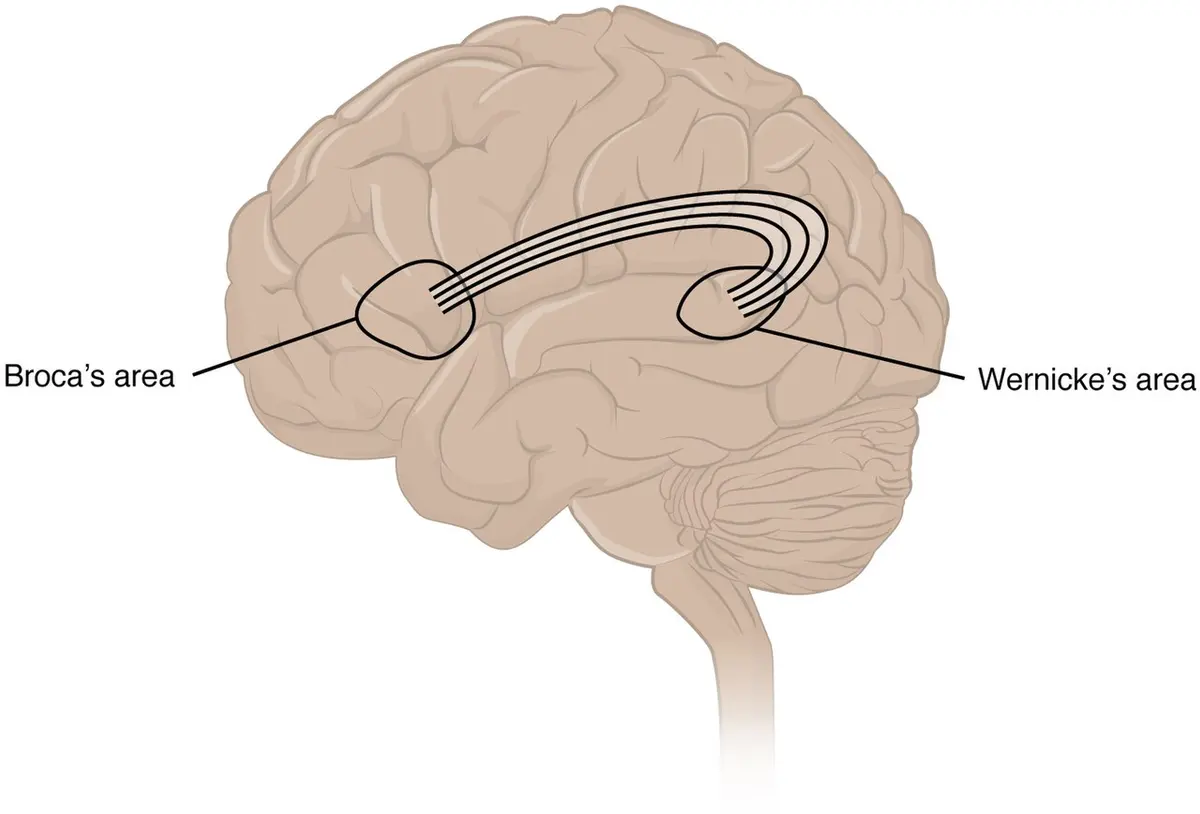
For about 150 years, textbooks have described Wernicke's area mainly as a center for understanding language. The new study suggests that this region also helps plan spoken words. Researchers studied people who were awake during surgery for epilepsy, using sensors placed directly on their brains.
The active patch, about the size of a nickel, is called the left posterior superior temporal gyrus. It switched on before people spoke, with more activity for longer or less common words. The same neurons also became active when people listened to speech, and the region sent signals to brain areas that control the muscles used for speaking.
That result helps explain an old puzzle. Some patients studied by Carl Wernicke could speak fluently but struggled to understand others, and their speech could be hard to follow. Damage linked to aphasia, a difficulty understanding or forming language, can disrupt communication even when a person can still speak.
Scientists had thought the brain might check speech only after it was spoken. But the usual brain scan method was too slow to show the order of events. Sensors placed directly on the brain let the researchers see that activity in the temporal lobe came before speech.
The finding may matter for brain-computer interfaces, devices that read brain signals to help people communicate. Many such devices read signals from motor areas, but for some people with aphasia, intended speech may not reach those areas intact. Researchers may need to look earlier in the process, where words are planned.
The role of Broca's area, a brain region linked to speech production, is now a question for researchers. The most useful next step is to learn how the two regions work together, since a clearer map could guide future communication devices.