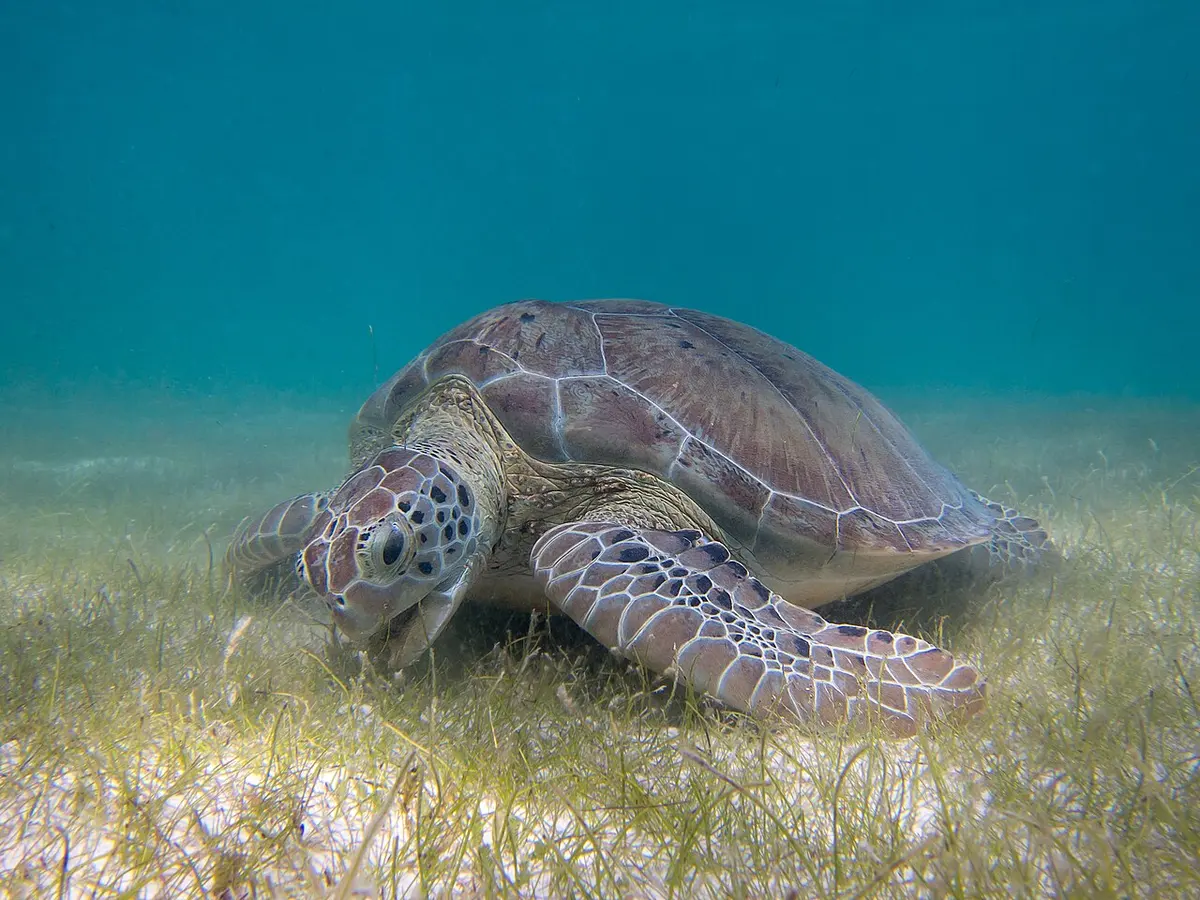
Nine young green turtles spent most of their tracked time inside a protected coastal wetland in Kalba, UAE. Satellite tags followed them through natural mangroves and a human-made basin. The basin drew the most turtle activity.
Kalba surrounds much of Al Qurm Wa Lehhfaiiah, a protected area that includes Khor Kalba on the UAE's east coast. The wetland is a Ramsar site, a designation for wetlands of international importance.
All nine turtles used the wetland as critical habitat. Their tags recorded more than 2,800 locations over seven months, mostly within about 3 km (2 miles) of the wetland entrance. The tags placed them inside the protected area for more than 80% of the time tracked. Staff from the Environment and Protected Areas Authority attached the tags to the young turtles in 2019 using harmless resin.
The turtles used the human-made basin beside the mangroves more than other parts of the wetland. Basin sightings were about five times as common as sightings elsewhere. 77% of the turtles' core-use areas were inside it. Built in the early 2000s for a planned waterfront, the basin went unused for its intended purpose before becoming part of the protected area.
Algae on the basin floor may provide food, and its enclosed shape may shelter turtles from larger predators. Turtles also gathered in the natural channel at low tide, possibly waiting for rising water to return to the wetland. That channel connects the wetland to the sea, but sits outside the protected boundary, so you can see why protecting the links between habitats matters.
One turtle stayed in the wetland for 93 days, then traveled more than 800 km (over 500 miles) to Masirah Island in Oman. The basin's heavy use shows that human-made spaces can become part of wildlife habitat. Still, protecting the basin alone would leave out the mangroves and the sea channel that young turtles also use. The study points planners toward the full coastal connection when they decide where protection should reach.